Be yourself; Everyone else is already taken.
— Oscar Wilde.
This is the first post on my new blog. I’m just getting this new blog going, so stay tuned for more. Subscribe below to get notified when I post new updates.
Be yourself; Everyone else is already taken.
— Oscar Wilde.
This is the first post on my new blog. I’m just getting this new blog going, so stay tuned for more. Subscribe below to get notified when I post new updates.

Music holds the power of culturally and emotionally influencing society. Since the beginning of time, music allows people to connect with sounds and messages with a deeper meaning, as we become influenced by the music we listen to. Certain songs affects our emotions, as upbeat energetic songs make us get up and dance, where a sad song might put you in your feels. Yet, not only does music have the power to change a mood, but also entire societies as the music people listen to can shift the atmosphere and change the behaviors within.
Given this, music has been used in many social movements throughout time. More specifically, during the 1950’s and 1960’s, music was pushing for the equality between white and black successful singers. During the Civil Rights Movement, famous white singers like Bob Dylan had become a staple name for the movement.
https://www.youtube.com/watch?v=90WD_ats6eE The Times They Are A-Changin’ by Bob Dylan
Bob Dylan released this song in January of 1964, that became the anthem that the frustrated youth played during these times, as many of the lyrics in the song are based on the Civil Rights Movement in the United States. This song in particular helped many people, especially ‘hippies’ feel better about what was going on around them, with a sense of peace that times are changing for the better. The fast paced tempo on the acoustic guitar that Bob Dylan plays pairs so well with his voice as his message for influencing the times helped so many people.
Freedom songs from the church or with strong messages became very popular as it started to give people a sense of being apart of a community and its entire behavior. In efforts to succeed, the relation between civil rights workers and the members of the community had to better. The director of the Southern Christian Leadership Conference, named Andrew Young, states, “They often brought in singing groups to movement friendly churches as a first step in their efforts…They knew how little chance they stood of gaining people’s trust if they presented themselves as straight out organizers: people were too afraid to respond to that approach. So they organized gospel groups and hit the road”
The most well known gospel group became The Staple Singers. During the height of the Civil Rights Movement, this group put their religious messages in their music to broaden the community during the societal upheaval. One of their most influential songs known as I’ll Take You There,
https://www.youtube.com/watch?v=uY3vgBzgYn4 – I’ll Take You There by The Staple Singers
The Staple Singers came out with this hit single in 1972, shortly after things were falling together in society. As this song is a religious song, it was relatable to so many Americans as they never mention any particular ‘God’ or certain beliefs. The main message through this song is imaging a place and time where things are better, while giving the audience that faith.

Reese, Andrew. “How Can Music Inspire Social Change?” Facing Today – A Facing History Blog, 2007, facingtoday.facinghistory.org/how-can-music-inspire-social-change.

If you don’t know who Jimi Hendrix is, odds are you’ve lived under a rock your whole life. The extremely famous guitar hero played a huge contribution to how music was performed and changed in the 1960’s. Jimi’s style of playing guitar was unique compared to every single guitarist before him. During this time, rock music was still well on its way of developing into what we know as rock n roll today, thanks to Hendrix. Through important recordings, songwriting, and live performances, he changed the game.
https://www.youtube.com/watch?v=TKAwPA14Ni4 – The Star Spangled Banner by Jimi Hendrix Live at Woodstock 1969
Jimi Hendrix took the stage at 9 am, August 18, 1969, and began performing The Star Spangled Banner at one of the largest musical festivals in history. Jimi then invented the wah-wah pedal at the Woodstock Music Festival which went down in history for a memorable performance. Stated by writer Zachary Crockett among the Invention of the Wah-Wah Pedal, “Invented in the midst of a musical revolution in the 1960s, the wah became, in the words of one critic, “psychedelia non-psychotropic aid.” Rocked up and down, the pedal evoked sounds that mimicked the cries of a human voice, bridging the divide between music and vocal communication. From Clapton to the theme song for cult classic film “Shaft,” the wah immortalized itself as one of music history’s most recognizable and influential technologies.” His continuous use of the wah-wah pedal was the icing on the cake for his innovative guitar chords and roaring distortion. His loud and sharp style made him a controversial artist for many people considering that Jimi was the only artist to take the extra mile and achieve his quality sound.
Nonetheless, Jimi Hendrix inspired many guitarist as he was the connection between psychedelia and black music fuzing traditions of jazz, rock, and roll to create his own image. Thus he became one of the greatest guitarist to live. Jimi’s aspirations evolved from artists like Bob Dylan, Albert King, and the Beatles. As Jimi spent a lot of his career forming his own bands, such as the Jimi Hendrix Experience, successfully reached record breaking singles like “Hey Joe” and “Purple Haze” along with several uncomparable achievements. Hendrix went down to be remembered in the Grammy Hall of Fame in 1999, and 2009, along with Grammy Lifetime Achievement Award, and last but not least the Rock and Roll Hall of Fame.
https://www.youtube.com/watch?v=zSsjtiky9xI – Purple Haze by The Jimi Hendrix Experience Live 1967
In March of 1967, the band’s single released throughout England as it reached top charts, even in the United States. Although the band did not last long, Jimi still continued to rock on with his life. He performed Purple Haze so many times he could do it in his sleep. Whether it be at Woodstock, or Atlanta Music Festival, Jimi always had the best shows.
According to Wallenfeldt, author of Sounds of Rebellion: Music in the 1060s, “Though his active career as a featured artist lasted a mere four years, Hendrix altered the course of popular music and became one of the most successful and influential musicians of his era. An instrumentalist who radically redefined the expressive potential and sonic palette of the electric guitar, he was the composer of a classic repertoire of songs ranging from ferocious rockers to delicate, complex ballads.”
Wallenfeldt, J. (2013). Sounds of rebellion: Music in the 1960s. New York: Britannica Educational Pub. in association with Rosen Educational Services.
Crockett, Z. (2015, November 5). The Invention of the Wah-Wah Pedal. Retrieved from https://priceonomics.com/the-invention-of-the-wah-wah-pedal/

The famously known American director, Quentin Tarantino, has been a mere DJ with every soundtrack to each and every one of his films, Kill Bill Vol. 1 being yet another amazing story that matches the music which was released on October 10, 2003. The soundtrack to the first volume of this two part film reached #45 on the Billboard 200 album chart, and #1 on the soundtracks chart, which was mostly produced and organized by RZA and the Wu-Tang Clan. The exuberant 2 hour film is accompanied by a wide diversity of music from jazz to R&B, with many old school hits and some of the weirdest songs I have ever heard. If you decide to listen to the full soundtrack, in the link below, it’s like riding a rollercoaster, just like the movie is.
https://www.youtube.com/playlist?list=OLAK5uy_kNmKeymbo7V3m3gDFBAgZjDtcLVtvp2iw – Full Kill Bill Soundtrack
The moral of the story in Tarantino’s film, Kill Bill, is simple: there’s nothing like revenge. Uma Thurman plays The Bride in the movie that awakes from a four year coma, remembering her husbands attempt to murder her on their wedding day. She seeks to find revenge and vengeance among everyone who played a part in her wedding day being ruined, four years of her life, and the unborn baby’s life taken. His carefully put together soundtrack tells a story within the story itself, in which I think there was no better way to set the tone than by opening with Nancy Sinatra’s cover to the song, Bang Bang (My Baby Shot Me Down), written by Sonny Bono, released in 1966, which was originally made for Cher, yet Sinatras cover became well-known through the movie.
https://www.youtube.com/watch?v=vPh7y_KkyjI – Bang Bang by Nancy Sinatra
Tarantino’s story starts with this songs riveting narrative about the protagonist bride, with lyrics lining exactly with the plot line. Her broken heart made a haunting, confused, and painful on the reflection of the lovers betrayal, both in the song and the film.
“Music played, and people sang
Just for me the church bells rang
Now he’s gone, I don’t know why
And till this day sometimes I cry
He didn’t even say “Goodbye”
He didn’t take the time to lie
Bang bang, he shot me down
Bang bang, I hit the ground
Bang bang, that awful sound
Bang bang, my baby shot me down”
Aside from lyrics alone, the songs guitar is a perfect counterpart to the soft and slow vocals, which in my opinion holds the song together without overwhelming it.
As you can expect from Tarantino, he manages to capture the perfect tone at one moment, then suddenly veer off into something totally unexpected, but still appropriately fitting the scene every time. During one of the strongest action scenes throughout the film, The Bride encounters The Crazy 88, as they spend most of the time fighting in silence. When the rest of The Crazy 88 burst into the scene, the twelfth track on the album named, Crane/White Lightning by Charles Bernstein, chimes in making the scene that much more impactful. The song creates tension mid fight, then suddenly focuses on the the fear The Bride feels towards the end of the fight as the song comes to an end, and she wins. As this piece does not have any lyrics in it whatsoever, it was originally set for a Metallica track yet Quentin really wanted it on his soundtrack.
https://www.youtube.com/watch?v=7EHaiFP1x2Y – Crane/White Lightning by Charles Bernstein
Mitchell, Elvis. “The ‘Kill Bill’ Soundtrack: D.J. Quentin’s Recycled Mix.” The New York Times, The New York Times, 26 Oct. 2003, http://www.nytimes.com/2003/10/26/movies/film-the-kill-bill-soundtrack-dj-quentin-s-recycled-mix.html.
Taylor, Paul, and Paul TaylorPaul Taylor. “Exploring Soundtracks: Kill Bill Vol. 1.” LemonWire, 27 June 2018, lemonwire.com/2018/06/27/exploring-soundtracks-kill-bill-vol-1/.
In the late 19th century, Hawaiian music became quite popular nearly around the world. Originating from Regge music that was born in Jamaica, “Jawaiian” is the Hawaiian style of Regge music across the islands. Hawaiian music was rooted from older religious chants and hymns, later mixing them with musical rhythms. As Hawaii is part of the United States, they express their unique identity through a Hawaiian drum dance chant, referred to as Mele Hula, as the dances are accompanied by traditional instruments like the drums and ukulele. To this day, it remains as a vital part of their culture and music.
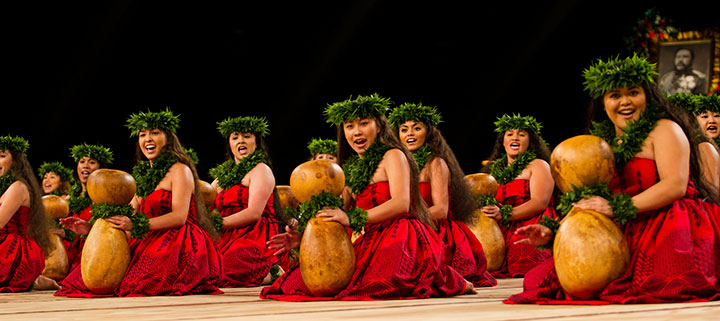
In 1878, Queen Liliuokalani created one of the most famous compositions in Oahu, Hawaii. The song, Aloha ‘Oe was composed as Liliuokalani was under house arrest at the Lolani Palace, as this song exhibits the beautiful, traditional culture of Hawaii. The song has become so popular often being played at local funerals, or sometimes weddings. It has frequently been seen as a farewell, sad song, yet the artist herself insisted it is a love song. In an esteemed panel of Hawaiis most popular artist, the article expresses, “”In the opening lines, the queen describes in Hawaiian the proud rain upon the cliffs, seeking out the lehuā flower. “The rain represents semen falling from Wākea, sky father, seeking out Papahanaumoku, earth mother,” explains Dr. Kekuni Blaisdell, who helped research and publish The Queen’s Songbook, a collection of 55 of her compositions. “It’s a poem about love and passion, man and woman. It’s much, much more than just goodbye.””
The musical elements of this traditional piece showcase Hawaiis use of the ukulele, distorted steel guitar and the harmonies of voices creating a slow tempo and rather large range towards the end of the song where her voice creates a large degree of volume in her performance.
The lyrics of this piece have caused a large amount of confusion throughout time as to where and why this song might be played. As you probably cannot understand the lyrics, here is a translation below.
Aloha ‘Oe (Hawaiian)
Words and music by Queen Liliuokalani
Ha’aheo ka ua i na pali
Ke nihi a’ela i ka nahele
E hahai (uhai) ana paha i ka liko
Pua ‘ahihi lehua o uka
Hui:
Aloha ‘oe, aloha ‘oe
E ke onaona noho i ka lipo
One fond embrace,
A ho’i a’e au
Until we meet again
‘O ka hali’a aloha i hiki mai
Ke hone a’e nei i ku’u manawa
‘O ‘oe no ka’u ipo aloha
A loko e hana nei
Maopopo ku’u ‘ike i ka nani
Na pua rose o Maunawili
I laila hia’ai na manu
Miki’ala i ka nani o ka lipo
Aloha ‘Oe (English)
Proudly swept the rain by the cliffs
As it glided through the trees
Still following ever the bud
The ahihi lehua of the vale
Chorus:
Farewell to you, farewell to you
The charming one who dwells in the shaded bowers
One fond embrace,
‘Ere I depart
Until we meet again
Sweet memories come back to me
Bringing fresh remembrances of the past
Dearest one, yes, you are mine own
From you, true love shall never depart
I have seen and watched your loveliness
The sweet rose of Maunawili
And ’tis there the birds of love dwell
And sip the honey from your lips
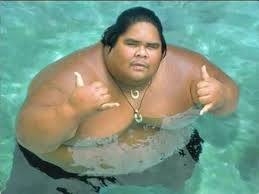
Among the many amazing Native Hawaiian singer-songwriters, Israel Kamakawiwo’ole, also known as IZ, was an incredible well-known Hawaiian musician and sovereignty activist. In Hawaiian his last name translates “the fearless eye, the bold face.” As early as 10 years old, IZ would perform at his parents work with his ukulele, singing to locals expressing the values and bringing his people together. It was in the summer of 1997, the beloved Hawaiian artist passed away at 38 years old from respiratory failure, as he went down in history. Many people know him from his song “Somewhere Over the Rainbow”, which became one of the most popular songs among the islands and outside as well. The song called, “Hawaii ’78” is one of Israel’s most powerful songs that originated out of Palehua, in Leeward Oahu, a very sacred place to the Hawaiian culture that was released in 1993. The song was originally written by Mickey Ioane and performed by IZ’s former band, the Makaha Sons of Niihau, as he took on his own version. The musical elements showcased in this song exhibit the old chanter and rather large collection of Hawaiian instruments used, starring the ukulele. The one and only session they had performed will forever be apart of Hawaiis heart. The pureness in the harmony among the groups vocals create a soft yet strong melody that embodies the sound of Hawaiians tradition music. Israels range is incredible as he sings over the pace of the song that moves along with the crescendo of the song, hitting the heart and the importance of Hawaii.
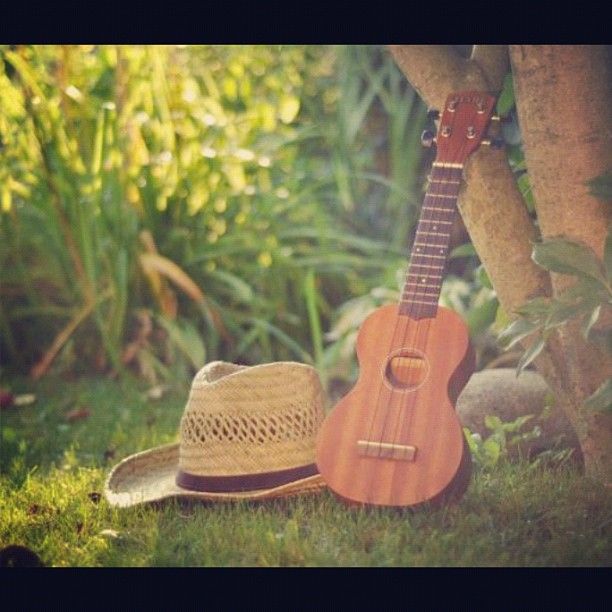
My personal experiences in Hawaii and the local music have always been phenomenal. No matter the artist, the ukulele is always being used and the live performance is filled with soul and peace. Hawaiian music will always hold a special place in my heart whether it was released in the 19th century, or yesterday.
Keeny, Michael. “50 Greatest Songs of Hawaii.” Honolulu Magazine, 2007, http://www.honolulumagazine.com/Honolulu-Magazine/June-2007/50-Greatest-Songs-of-Hawai-8217i/.
Deniz, Lacy. “Power of Palehua: How IZ Got His Inspiration for ‘Hawaii ’78’.” Https://Www.hawaiinewsnow.com, 16 Nov. 2018, http://www.hawaiinewsnow.com/2018/11/15/power-palehua-how-iz-got-his-inspiration-behind-hawaii/.
Kamakawiwo’ole, I. (2010). “Youtube Hawaii ’78”
Liliuokalani, Q. (2012). “Youtube Aloha ‘Oe”
Throughout the past decade or so, the CD has slowly been dying as it has been replaced by digital downloads and streaming. Yet, the success of the CD is of no doubt. The journey to creating the Compact Disc began in the early 1970’s with work done by Sony and Phillips, to create an optical disc with digitally encoded sound that was read by a laser. As many people know, before the CD, our parents and grandparents listened to all their music through vinyl and and cassette tape, and even an 8-track player. Once the CD arose into culture, the problem people had was getting their hands on a CD player. The first album released to the market was Billy Joels 1978 album “52nd Street”, which was fully released on Compact Disc in 1982. It was Billy Joels very popular and already well-known album that made him brave enough to release the first ever CD. Shown below is one of Billy Joels songs off of the album, called “My Life”, which is one of my personal favorite songs by him, given I do not know many. This song was produced by Phil Ramone and originated in New York City. I think it’s really cool that you can see on the bottom right of the album cover it displays the compact disc logo.


Shortly after, Sony created the first ever compact disc player called the CDP-101, that sold for roughly $750, which the size was huge compared to anything today. The size was an issue, as nearly two years later Sony came out with the Discman, a portable CD walker. Personally, growing up my parents used CDs very often. My mom had a Sony Boombox that held 6 discs at one time, playing whichever one she chose. We slowly began to have a rather large collection of CDs, as in the late 90’s they were very easy to access and were considerably cheap in the stores. I got my first portable CD player in second grade, which I thought I was the coolest kid on the bus with my headphones in playing the old “Marshal Mathers Lp” or one of the many “Now Thats What I Call Music” mixtapes. Nearly everytime we walked into the store, my mom would buy me a new CD to listen to. Once I was in fourth grade, my babysitter taught me how to burn CDs and make my own with whatever songs I wanted on there. That was a game changer, in which I think that blossomed the idea of being able to stream music.
When the CD was born, it pushed the vinyl to the side. As the use of vinyls and cassettes became nearly obsolete, yet the CD was held its focus for nearly two decades. During this time, CD-R and CD-RW became very popular, which was a blank disc that allowed users to download any music they would want, like the mixtapes my babysitter made me. As this audio format blossomed, it soon came to an end as history repeats itself. The emergence of the MP3 player in the 2000’s put the CD sales down, and soon nobody was buying them anymore. In fact, a well known Kodak aperture article stated that, “…by 2015, only 24% of music sales in the United States were courtesy of the CD. Three years later, Best Buy, one of the leading CD retail sellers announced plans to significantly decrease focus on the sales of what was once the form of music entertainment.” Even though CDs are still being sold in stores today, it may not be too long until an artist will release the last CD on the market.
Twenty years ago, a new revolution of music came about when Napster was created that changed the way of music forever. Napster had nearly over 20 million users, which was founded as a P2P file sharing software where listeners could share music files into an MP3 format. This later got shut down due to wholesale infringement against copyrights.
Today, I hardly even see people using iPods anymore as everything is on their phones. Just like nearly everyone I know, I pay a monthly subscription to streaming services like Spotify and Apple Music. They both offer slight differences which is why I have both of them. I can listen to any song that I want at anytime, and make unlimited number of playlists that I please. This is the number one used service for music around the world as Spotify has nearly 248 million users! Spotify is unique because at the end of the year, they do an entire recap of your most streamed music and your top five artists. If anybody is interested, a link to my top 2019 playlist is posted here.

https://open.spotify.com/playlist/37i9dQZF1EtoRgXCNkRw5H?si=0BZOr96CSHm9-pyV_-tWeA
In 2019, Post Malone was listed at the highest streamed artist with 6.5 billion streams, with Billie Eilish right behind him at 6 billion. Yet, the highest streamed song on Spotify in the last year is a duet by Cuban singer Camilla Cabello and Canadian singer Shawn Mendes called, “Señorita”. This hit had nearly 1 billion streams, which was released June 21, 2019 in the US as a Latin Pop song, being produced by Andrew Watt and Benny Blanco.
To this day, I still own my CD collection that ranges from albums by Jack Johnson to multiple mixtapes. Yet they hold a special place in my heart, I never use them anymore because every song I want is at my fingertips. I will probably never get rid of them though. I recall playing CDs in the car when I was young, and I realized that many cars that are being made today do not even have a CD player in them anymore, where at one point (not too long ago) a CD player in a vehicle was luxury. Times are moving so fast and so is the music industry. It makes me wonder where the future will take us with music. Will we continue to stream music for many years, or will we have them in our head at one point? That is a bit extreme but at this rate, you never know.
Waniata, R. (2018, February 9). Remembering the rise (and final fall) of the late, great Compact Disc. Retrieved from https://www.digitaltrends.com/features/the-history-of-the-cds-rise-and-fall/
Wallace, D. (2019, August 16). What were the First Albums Released on CD? Retrieved from https://kodakdigitizing.com/blogs/news/what-were-the-first-albums-released-on-cd
Joel, B. (1978). Youtube. Retrieved from https://www.youtube.com/watch?v=HVX80UpMPDI
Mendes, S., & Cabello, C. (2019). Youtube Retrieved from https://www.youtube.com/watch?v=Pkh8UtuejGw
What’s the Use? by Mac Miller
Mac Miller’s fifth studio album titled, “Swimming” was released on July 23rd, 2018 where his song What’s The Use? is featured on. The smooth number that makes you want to dance is collaboratively written by Snoop Dogg, Thundercat, Pomo, and Miller himself. The song is composed by several people named M. McCormick, C. Broadus, and S. Bruner which originated and was recorded in the heart of Los Angelos, California, signed through Warner Bros. Unfortunately, this was Mac’s last album that he released himself as he passed away nearly three months after.
The uplifting artist has created so many remarkable songs that have left a huge impact on people. This song in particular has personally always lifted my mood, and within three minutes I am smiling, singing along with a smile. The authenticity that Mac showcases sets the funky, groovy, yet soulful tone of the song as he uses many different instruments (piano, guitar, drums, and bass) that complipents the exquisite timbre or “quality of sound”. During an interview with Zane Lowe, posted below, Mac explains the making of the song, “Then Thundercat came over that night and I was like, wait, could you try a bass line?” Swear to God, that was the first thing he played, like not even checking the notes or anything . . . He literally picked up the bass and that was the first thing he naturally did.” This explains one of the most distinctive sounds on the track. The overall quality of sound in this song, or texture, is considered to be a homophonic texture. Homophonic texture is the most common texture in music, and in this case, the song does not sound common whatsoever. Mac Miller’s beautiful voice expresses the melody, as several different voices and instrument solos play in the back ground. The diversity and chemistry that is heard in this song is remarkable. The song varies in tempo, as the slowest BPM sits at a steady 78, where in the climax of the song, it reaches 157. The vibrations of the air, also known as pitch, carries at a fast pace pitch that hits the heart and makes you want to dance at the same time.
The song was based on his breakup with Ariana Grande, as he proves that staying positive will always win. Mac struggled in the past with drug abuse, as well as reaching a healthy mindset, which he expressed his success in his track: “When I had nothing shit it wasn’t so funny // Made a promise to the homies nobody go hungry // Look how far we came, still they throwin’ dirt on my name // But it never worried my brain”.
Back to Black by Amy Winehouse
1- Singer and songwriter, Amy Winehouse, released her album titled, Back to Blackon October 27th, 2006. In early 2007 the single Back to Black on the same titled album became a hit single. This soulful single originated from the UK, where it held #8 on the UK Singles Chart. In the US, the song hit #7 on the Billboard Hot 100 selling nearly 1.85 million copies. As with most of Winehouse’s music, the lyrics come straight from her. The song is also written with the help of Mark Ronson, who also composed the piece as well as most of her album.
Amy dedicated this song to her ex, Blake Fielder-Civil, who left her for another woman. The video is displayed in black and white, where she is brought to a cemetery that symbolizes Winehouse’s heart in the grave. Winehouse states in an interview given by Sun newspaper, “‘Back to Black’ is when you’ve finished a relationship and you go back to what’s comfortable for you. My ex went back to his girlfriend and I went back to drinking and dark times.”
There are various elements to analyze music with. The breakdown of this song is just as unique as Amy herself. With her long ranged vocals, the beat has a pulse that sounds familiar to a 1960’s girl groups band drops in right away with the fast paced tempo at 118 BPM (beats per minute). The meter holds a simple quadruple 4/4 steady pattern through the whole song. The steady piano riff, kick drum, and tamborine play a significant role leaving the audience feel Amy’s emotions like their own.
FWiser, C. (2010). Back to Black by Amy Winehouse – Songfacts. Retrieved from https://www.songfacts.com/facts/amy-winehouse/back-to-black
(2009, December 23). Retrieved from https://www.youtube.com/watch?v=TJAfLE39ZZ8
This is an example post, originally published as part of Blogging University. Enroll in one of our ten programs, and start your blog right.
You’re going to publish a post today. Don’t worry about how your blog looks. Don’t worry if you haven’t given it a name yet, or you’re feeling overwhelmed. Just click the “New Post” button, and tell us why you’re here.
Why do this?
The post can be short or long, a personal intro to your life or a bloggy mission statement, a manifesto for the future or a simple outline of your the types of things you hope to publish.
To help you get started, here are a few questions:
You’re not locked into any of this; one of the wonderful things about blogs is how they constantly evolve as we learn, grow, and interact with one another — but it’s good to know where and why you started, and articulating your goals may just give you a few other post ideas.
Can’t think how to get started? Just write the first thing that pops into your head. Anne Lamott, author of a book on writing we love, says that you need to give yourself permission to write a “crappy first draft”. Anne makes a great point — just start writing, and worry about editing it later.
When you’re ready to publish, give your post three to five tags that describe your blog’s focus — writing, photography, fiction, parenting, food, cars, movies, sports, whatever. These tags will help others who care about your topics find you in the Reader. Make sure one of the tags is “zerotohero,” so other new bloggers can find you, too.
Have a WordPress.com account? Log in now.

